Program & Engineering Manager, Agile Coach and Change Agent. nomadship, kumis and team agility.
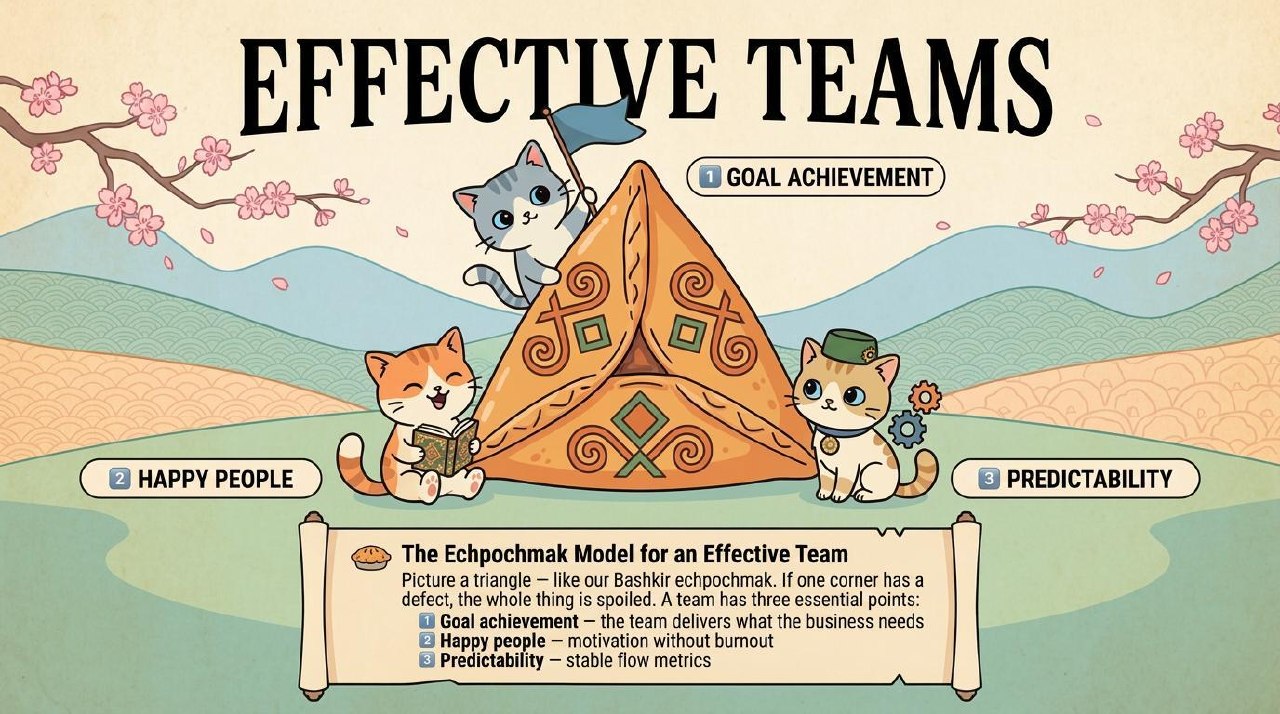
The Triangle of Team Efficiency: Goals, People, Flow
TL;DR: An effective team is one that: Achieves its business goals Maintains psychological safety and team motivation Delivers predictably through stable flow metrics Three pillars. One triangle. The Premise Two fintech teams spent three months building limit management systems in parallel. One for credit cards, one for checking accounts. Each team: 7–8 people, costing ~$100K/month (average US/EU engineering salary $120–150K/year per person, fully loaded). At the quarterly review, they discovered 70% functional overlap. ...

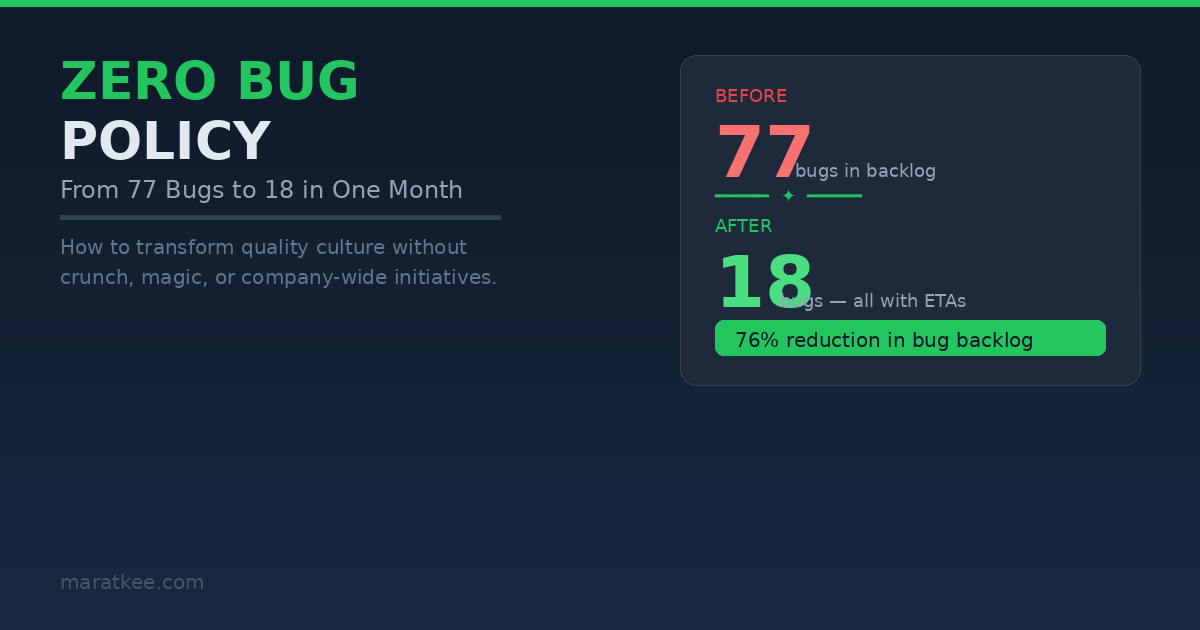
Zero Bug Policy: From 77 Bugs to 18 in One Month
77 bugs in the backlog. 60 of them without any due date. One month later: 18 bugs. Every single one with an ETA. No magic. No crunch. Just a policy. The Problem How were bugs prioritized before? Three criteria: Who screams loudest — the most frustrated stakeholder wins Which client has the biggest ARR — revenue drives priority How urgent it sounds — panic is contagious The result? A chaotic queue, broken promises, customer-facing teams losing trust in engineering, and engineers trapped in constant context-switching. ...
Boosting Efficiency with WIP Aging Insights and Tools
When examining real workflow data, there’s a common pattern: clusters of tasks that have aged significantly, some clearly stagnating beyond recognition acceptable timeframes. These cases point to one of the most important yet very often overlooked metrics in flow management: WIP Aging. WIP (Work In Progress) Aging measures the elapsed time that a work item has spent in active progress but remains incomplete. This metric serves as an early warning system for workflow problems, helping teams identify where work gets stuck before it significantly impacts delivery timelines. Unlike cycle time, which analyzes completed tasks retrospectively, WIP Aging provides real-time visibility into current work, making it the single most actionable metric for proactive flow management. ...
Monte Carlo Simulation: Forecasting Throughput and Project Timelines
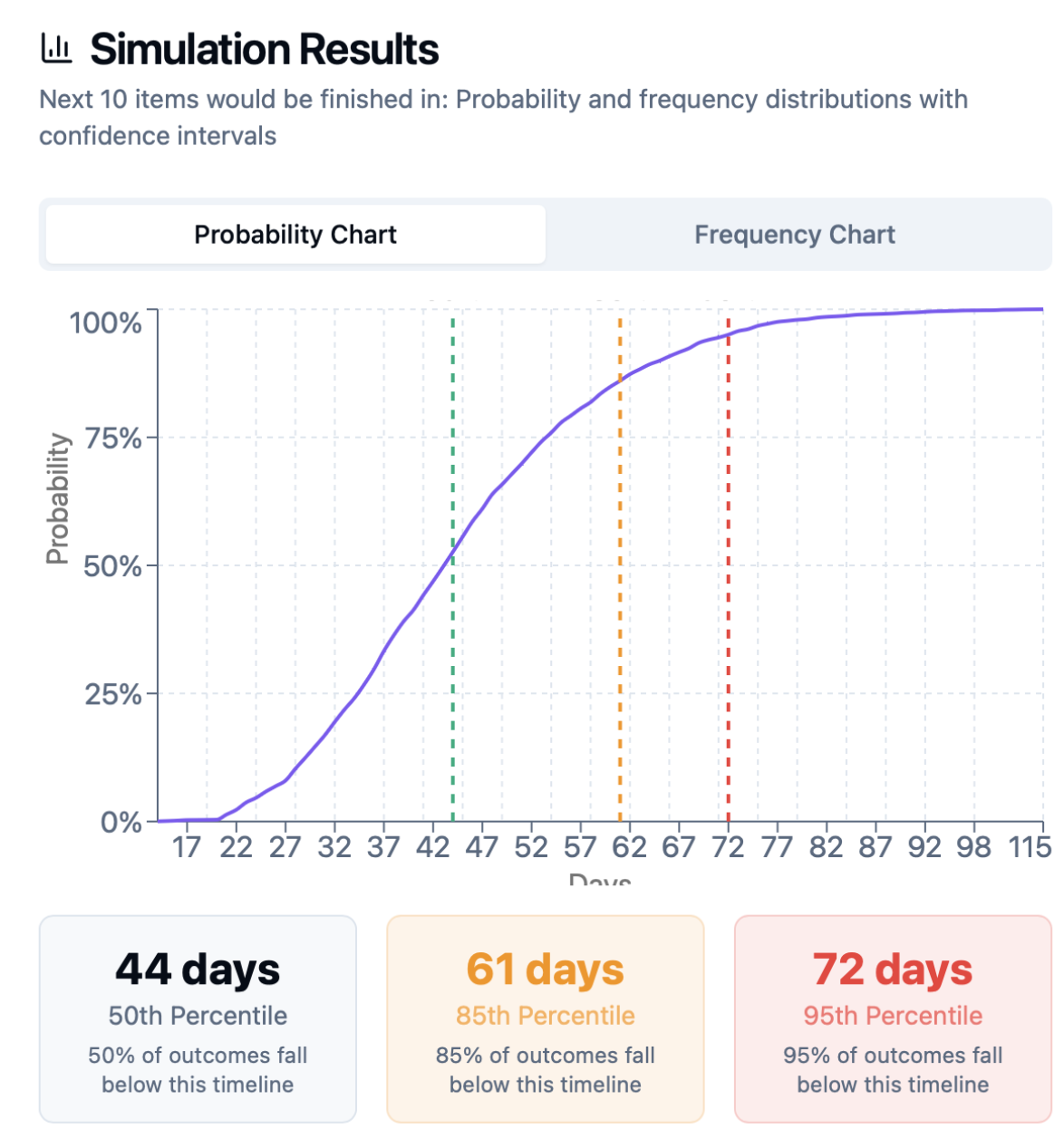
TL;DR: Forecasting team Throughput is super-easy and much more reliable than traditional methods, if you limit your work in Progress. Reliability confirmed by research data. We’ve already extensively covered Throughput (one of the flow metrics), how to analyze Throughput data from 3 key angles. And why it’s better for forecasting than storypoints. Now let’s get to essentials and practical questions that our management looooves to ask: “When will you guys finish this project of X items”? ...
3 key data slices to understand your team's Predictability through Throughput (pun intended).
Today we’ll talk about Throughput metric. Why is it so important, how to read it’s patterns and what to be cautious about. Premise Imagine walking into a bar on a Friday evening, exhausted, and ordering a beer flight. The bartender thinks: “Over the past hour we completed 12 orders; there are 4 in progress; this will be the fifth. Your flight will arrive in 20–25 minutes.” There are no subjective complexity estimates - only historical data to forecast wait time. Wouldn’t it be great if an IT team could plan as simply, honestly, and predictably? Ha-ha, you wish ...
5 Reasons Why Your Story Points Aren't Working (And What to Do About It)
Over seven years of running Story Points workshops, I’ve seen the same pattern: teams learn the technique, apply it for a few sprints, then gradually drift back to old habits. At my current scale — 47 teams, around 400 people in IT — 60% use Story Points, 40% don’t. What’s interesting: those 60% who do use them do it completely differently. Even 3 months after the training, only 20-30% use Story Points correctly (as intended). The problem isn’t the tool itself, but how we use it and what we expect from it. ...
Product Operations: simple steps to build transparent Feature Pipeline to dramatically lower Lead Time
(Experience from an AI-Based Fintech KYC SaaS Startup Focused on LATAM and Africa) Your regular challenge: When Sales, Marketing and IT Speak Different Languages Our SaaS startup served emerging fast-paced fintech markets (it still is). Speed + compliance were existential. Since most startups live on venture capital with limited runway, every delay in shipping value to the market means lost clients and regulatory risk. It also a huge roadblock on your path to become self-sustainable. So you need to be super frugal and efficient. ...
Stop being a "Feature Factory", you can't afford it! Shift to Product-Led SaaS with an easy-to-use Feature ROI check
The startup scene in 2022 and 2023 has been tough. This “Startup Winter” has seen less funding, many layoffs, and startups closing down. The hopeful times of 2020 and 2021, driven by big investments, feel far away now. Add to this the global events and banking decisions, and we’re in a tricky spot. I’ve helped startups for 10 years, and one thing is clear: now isn’t the time to just keep making new features. Look at fintech and other SaaS areas. A startup that keeps adding features for every small need is very different from one that focuses on the big needs and does them really well. In these tough times, guess which one stands strong (spoiler: neither, but second is more sustainable)? ...
5 essential NOC Metrics to reach high uptime and detect potential outages
My latest tenure of 2.5 years is closely related to Designing and Adopting Incident Management Framework (as part of Program Management org). This activity was driven with two primary objectives in mind: Reach and maintain system uptime of 99.99% (our APIs and SDKs). Ensure engineering is always firsthand source of information for any potential outage that can result in downtime. In our foundational days, we lacked a comprehensive alerting and monitoring system. Establishing the Network Operations Center (NOC) Team was our strategic move to shape a robust system and take charge of Incident Management. We not only touched the 99.98% uptime benchmark but also heightened our proactivity from spotting 60% of incidents ahead of our merchants to a resounding 95% and higher. ...
Navigating OKR Challenges: Common Pitfalls and Agile Solutions
Over the past 2 years, I’ve been working as Program Management lead at Metamap.com, helping to set up OKR framework among other things. As challenging as just working with OKRs is, we are a distributed team, spanning from PH / SG to the very west coast and even Hawaii :) The common issues we’ve found and discovered led me to creating this blog post. So without further ado, It’s time to delve into the captivating world of OKRs - Objectives and Key Results. These are the guiding stars that lead your organization to its true north. Embarking on this journey can sometimes make you feel like you’re treading choppy waters. In today’s post, we’ll chart a map of these common pitfalls and equip you with an Agile compass to help navigate with confidence. ...