How to work with sources of AI resistance

AI resistance shows which part of the work system is still missing: purpose, role, skill, environment, accountability, or flow. This guide begins where diagnosis ends. If an area is red, open the relevant section and choose 1–2 actions for the next sprint. People’s positions are not personality types. The same person can be an advocate in one scenario, a productive skeptic in another, and an avoidant participant in a third. The source of resistance shows what needs to be fixed. A person’s position shows how to act. ...
July 23, 2026 · 20 min · Marat Kiniabulatov

AI adoption checklist for organizations

AI adoption checklist for organizations AI is already in the team. The question is where you are now and what to do next. This checklist is based on real adoption work: mistakes that repeat from company to company and practices that consistently work. Before using the checklist, take the diagnostic →. It will show which zones are burning red in your own team. Four phases Phase Main question Main mistake 1. Sense-making Why are we doing this? Starting without an answer to “why” 2. Preparation Is the environment ready, and are there rules? Giving access without context 3. Launch Who is responsible, and how do we verify? No agreement on responsibility 4. Scaling Why did acceleration fail to shorten delivery? Scaling before it works in one team Phase 1. Sense-making Before anyone gets access to an AI tool. ...

June 28, 2026 · 8 min · Marat Kiniabulatov

Why teams resist AI — and what to do about it

Why teams resist AI Every month, one question about AI in teams: how roles change, where processes break, and what to do about it. This is The Human Loop. The first issue: why teams resist AI — and what to do about it. Inside: a map of six sources of resistance, five positions people take, an E2E-team case, the diagnostic, the AI adoption checklist, and the AI Resistance Map as a working template. ...

June 28, 2026 · 19 min · Marat Kiniabulatov
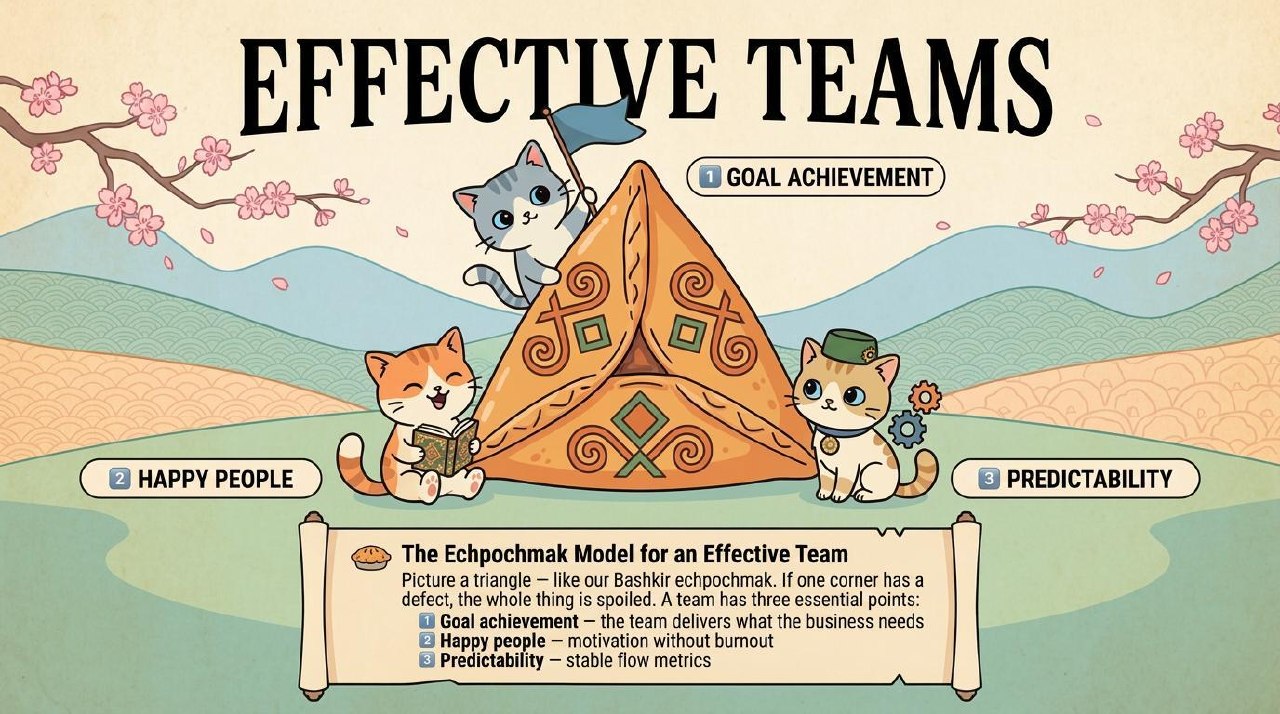
Effective Teams: the Echpochmak model with goal achievement, happy people, and predictability

The Triangle of Team Efficiency: Goals, People, Flow

TL;DR: An effective team is one that: Achieves its business goals Maintains psychological safety and team motivation Delivers predictably through stable flow metrics Three pillars. One triangle. The Premise Two fintech teams spent three months building limit management systems in parallel. One for credit cards, one for checking accounts. Each team: 7–8 people, costing ~$100K/month (average US/EU engineering salary $120–150K/year per person, fully loaded). At the quarterly review, they discovered 70% functional overlap. ...

May 15, 2026 · 7 min · Marat Kiniabulatov
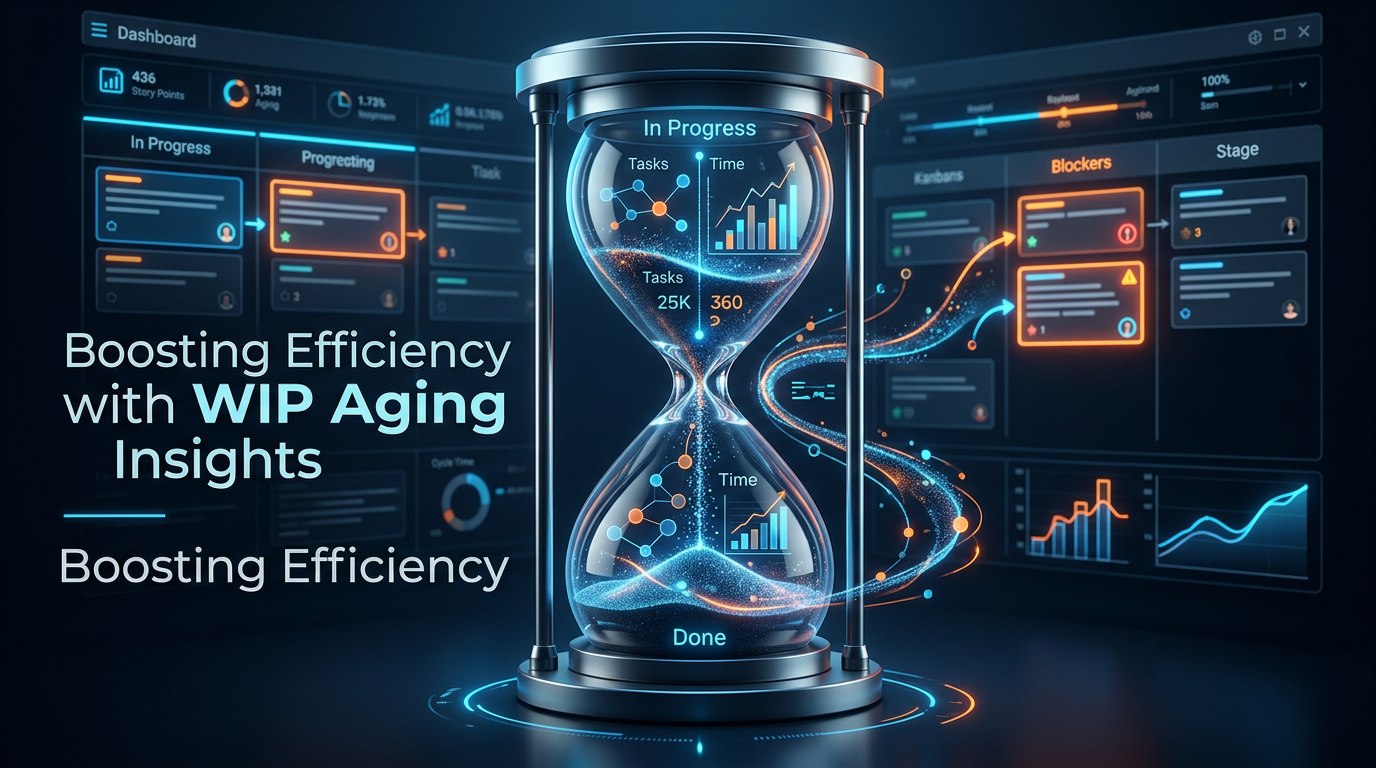
WIP Aging dashboard with an hourglass, workflow stages, blockers, and flow metrics

Boosting Efficiency with WIP Aging Insights and Tools

When examining real workflow data, there’s a common pattern: clusters of tasks that have aged significantly, some clearly stagnating beyond recognition acceptable timeframes. These cases point to one of the most important yet very often overlooked metrics in flow management: WIP Aging. WIP (Work In Progress) Aging measures the elapsed time that a work item has spent in active progress but remains incomplete. This metric serves as an early warning system for workflow problems, helping teams identify where work gets stuck before it significantly impacts delivery timelines. Unlike cycle time, which analyzes completed tasks retrospectively, WIP Aging provides real-time visibility into current work, making it the single most actionable metric for proactive flow management. ...

October 29, 2025 · 7 min · Marat Kiniabulatov

5 Reasons Why Your Story Points Aren't Working (And What to Do About It)

Over seven years of running Story Points workshops, I’ve seen the same pattern: teams learn the technique, apply it for a few sprints, then gradually drift back to old habits. At my current scale — 47 teams, around 400 people in IT — 60% use Story Points, 40% don’t. What’s interesting: those 60% who do use them do it completely differently. Even 3 months after the training, only 20-30% use Story Points correctly (as intended). The problem isn’t the tool itself, but how we use it and what we expect from it. ...

June 26, 2025 · 5 min · Marat Kiniabulatov